From Tsintzina to Main Street
The family history in seven short chapters.
Chapter 1 · Tsintzina, before 1821
A village where three gorges meet
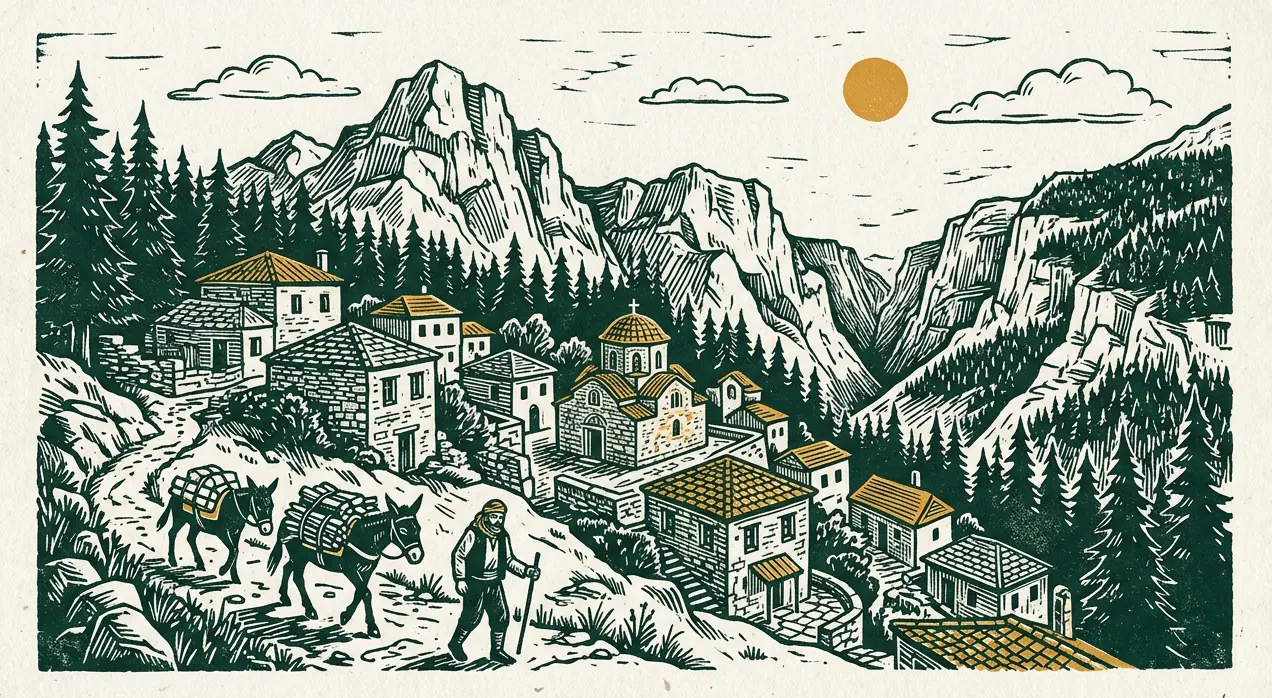
Tsintzina sits 1,100 meters up in the Parnon mountains of Lakonia, in a dense fir forest at the point where three gorges meet. It is an old place. It appears in Byzantine records from the twelfth century, and the English traveler William Leake described it in 1806.
The Lambros family is said to have come from Agios Dimitrios, lower down near the town of Geraki. In the early 1700s, like many families harassed under Ottoman rule, they moved higher into the mountains, toward the region called Tsakonia, where people spoke a dialect descended from the Doric Greek of ancient Sparta.
Nobody is sure what the village’s name means. The local historian Spiros Andritsakis offers two readings from the Tsakonian dialect. One is “small knot”, or crossroads, which suits a village on one of only two routes from southern Parnon to the sea. The other is the word for an oak shrub that grows all around it and was used to tan leather, once the village’s commonest trade.
The Tsintzinians worked in hides and sheep products, wove cloth and made wooden barrels, and traded them from Astros on one coast to Gytheio on the other. Vineyards covered the best land. Winters were cold, and there was one harvest a year.
People in this chapter
Chapter 2 · Zoupena, 1770s to 1840s
Down to the plain
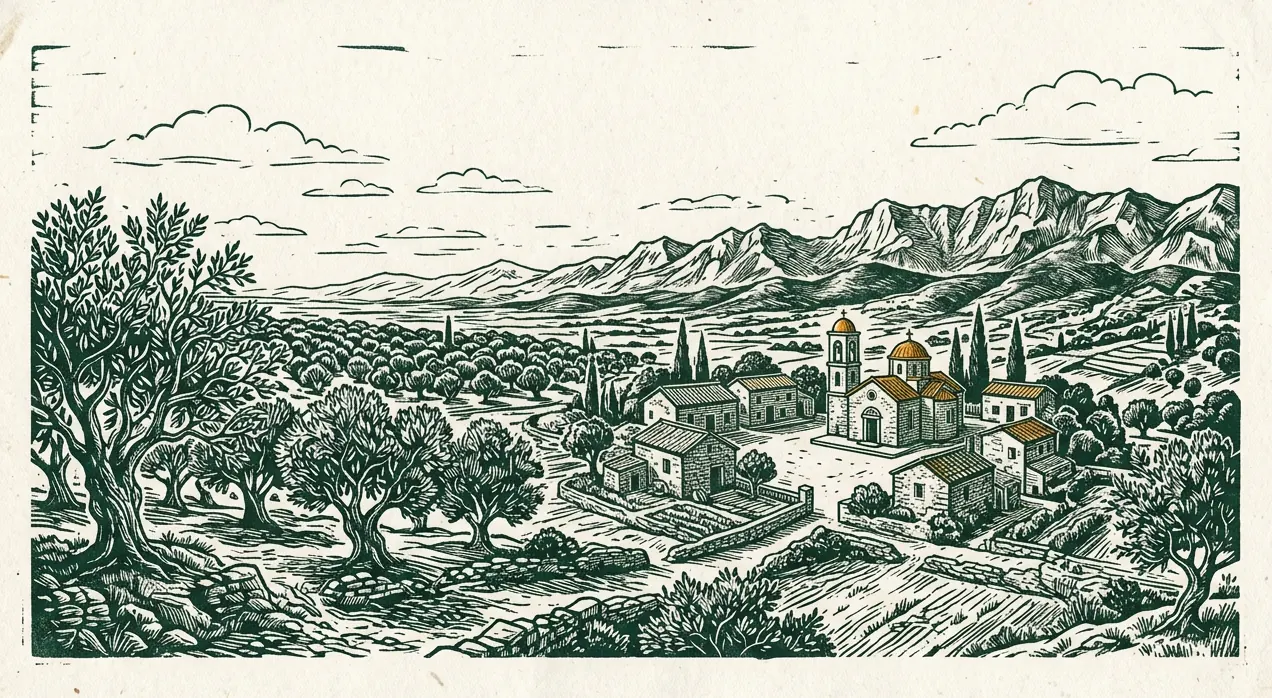
The move down the mountain began with shepherds. Once the revolt of the 1770s had been put down and the mercenaries hired to crush it were expelled, the lower slopes felt safe enough for winter grazing. Shepherds built huts, kalyvia, and lived in them from November to April.
Then came the War of Independence. Georgios Lambros (opens in a new tab), the earliest ancestor the family can name, is listed among the Tsintzinians who fought in it. With the Turks gone, families took over farmland on the plain. By the mid-1840s almost all of them had settled in two villages: Goritsa, on dry scrub that had to be cleared, and Zoupena, with fertile fields and old olive groves. Most of the Lambroses settled in Zoupena.
Tsintzina was not abandoned. For more than a hundred years, into the 1950s, the families of both villages rose before dawn each June, loaded their mules and donkeys, and climbed in convoy to spend the summer in the mountain air, away from the heat and the malarial mosquitoes. The gardens they had planted in spring were ready when they arrived. In the evenings bonfires were lit and people strolled the promenade from end to end.
Emigrants came home for those summers from Romania, Egypt and America, dressed in the fashions of Paris and New York. The taverns filled, marriages and baptisms were arranged, and there was singing until early morning.
People in this chapter
Chapter 3 · The crossing, 1873 to 1920
Following Tsakonas
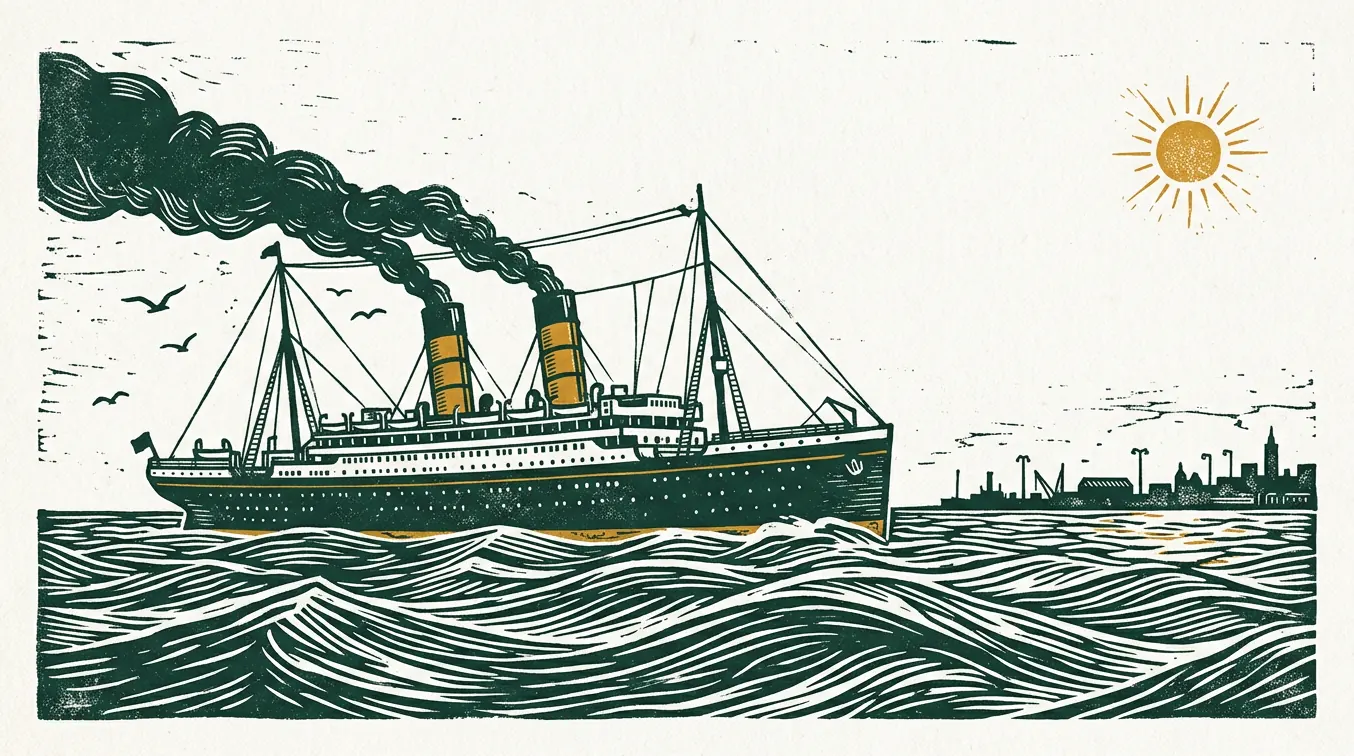
In 1873 a Tsintzinian named Christos Tsakonas reached Chicago, a city rebuilding after its great fire. There were then about 400 Greeks in all of North America. Two years later he went home and came back with five companions, among them Nicholas Benekos of Zoupena.
Tsakonas opened the first Greek-owned candy store, in Milwaukee, in 1882, and built a chain of fruit and candy stores from Chicago to Philadelphia. He set up a shop wherever young immigrants were settling, handed it to someone with a head for business, and so created jobs for the next arrivals. Within twenty years there were eighty stores. The historian Peter Dickson credits him with bringing nearly a thousand young men from Lakonia to America between 1875 and 1891.
The Lambroses of Zoupena were close to the start of it. Nicholas Benekos was brother-in-law to the village priest, Papa-Georgios Lambros (opens in a new tab), and the priest’s son John (opens in a new tab) reached Chicago in 1884. He went home in 1888 and came back with his seven-year-old brother, Basil (opens in a new tab). Their cousin John D. (opens in a new tab) arrived around 1890 and settled in Jamestown, New York.
In April 1903 it was the turn of fifteen-year-old Anastasios, soon to be Harry (opens in a new tab), who landed in New York with John D. (opens in a new tab)’s address pinned to his lapel. His sisters Stamata (opens in a new tab) and Anna (opens in a new tab) followed as brides in 1906 and 1907, his brother Athanasios (opens in a new tab) in 1911, and his sister Effie (opens in a new tab) in 1920.
Some Tsintzinians went further still. They were the first Greeks to open businesses in Los Angeles and in Hawaii, and a few followed the gold rush to the Klondike.
People in this chapter
Chapter 4 · Chicago, Jamestown, Oneonta
Fruit, candy and flowers
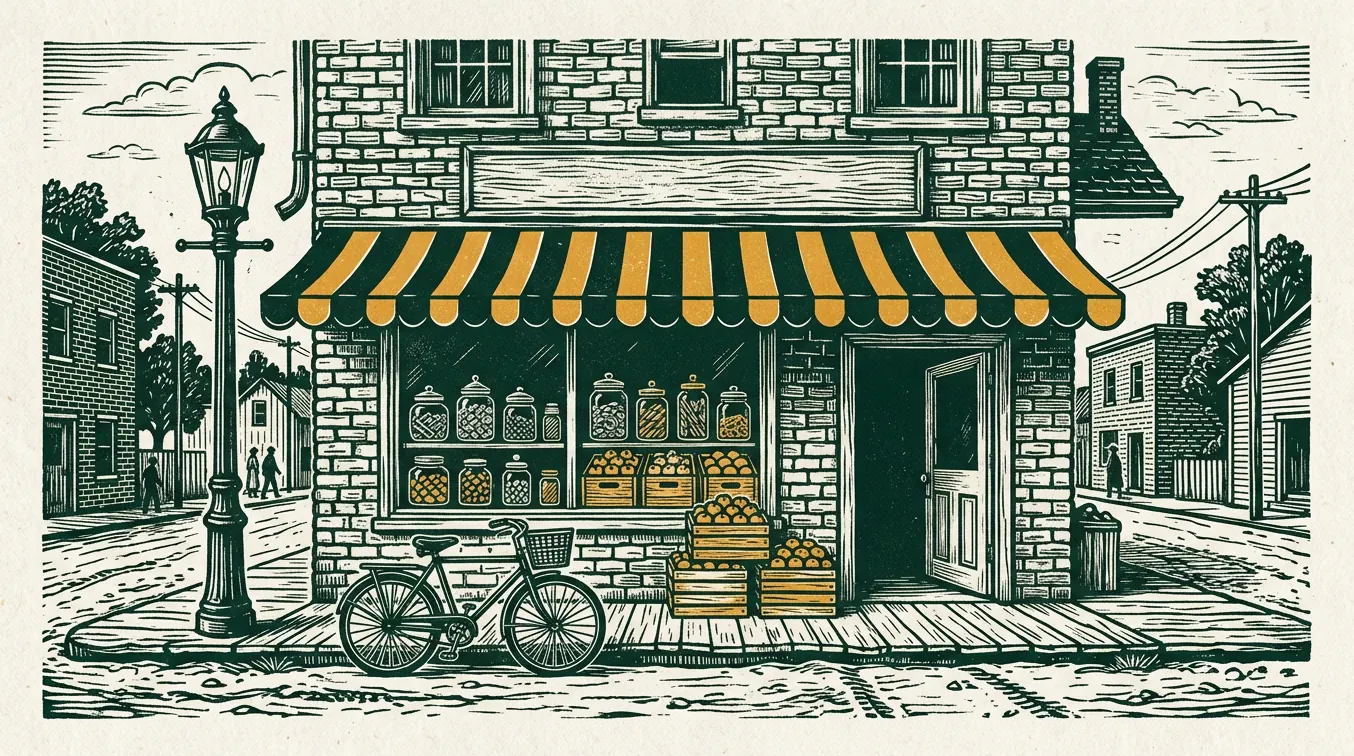
John G. Lambros (opens in a new tab) became a florist on South Halsted Street in Chicago and put his little brother through school; Basil (opens in a new tab) grew up to run a restaurant. In Jamestown, John D. (opens in a new tab) took over the town’s first Tsintzinian fruit and candy store in 1904 and became the address that boys from Zoupena were sent to.
Harry (opens in a new tab) worked his way along the chain: Jamestown, then Wooster, Ohio, selling candy for his Benekos relatives, then his own Community Grill in Cortland, New York. In 1914 he arrived in Oneonta, where his sister Contillo (opens in a new tab) and her husband Bill Georgeson lived, and where his sister Stamata (opens in a new tab)’s in-laws, the Laskaris family, had a candy store at Main and Dietz Streets.
Harry (opens in a new tab) and Bill opened a billiard parlor. It became a sweet shop, Diana’s Sweets, making its own ice cream and candy. After a year in France with the Army, Harry (opens in a new tab) married Mary Zaharis in 1922, and in 1927 he turned the shop into the Diana Restaurant, with a candy maker, Arthur Giftakis, as his partner.
Prohibition tempted him. Soon after the Diana opened he was arrested for bootlegging; the liquor was hidden under the risers of the back stairs. The judge read his war record, told him he was a family man with a legitimate business who should clean up his act, and dropped the charges. A $7,000 loan from Jim Nickles carried the restaurant through the Depression.
People in this chapter
Chapter 5 · Oneonta, 1927 to 1991
The Diana
For more than sixty years the Diana was where Main Street met: businessmen, workers, shoppers, professors and students, with the town’s movers and shakers at the back corner tables and the city historian at lunch every day, listening. People remembered the lasagna, the Greek baked chicken and potatoes, and the LaMonica Burger, named for the owner of the local bottling company.
Three generations of the family worked there. Harry (opens in a new tab)’s children Helen (opens in a new tab) and George (opens in a new tab) started in the early 1940s. Angie (opens in a new tab) and Nick (opens in a new tab) helped as youngsters. Their cousins Jimmy (opens in a new tab) and “Big Helen (opens in a new tab)” came from Jamestown to tend bar and wait tables.
Harry (opens in a new tab) died in 1956. George (opens in a new tab), home from the Battle of the Bulge with a Purple Heart, ran the restaurant for the next thirty-five years with Helen (opens in a new tab) beside him, joined in the 1960s by his wife, Mary, whom he had met at a Tsintzinian convention.
The youngest, Nick (opens in a new tab), took a different road, though not a long one. He coached basketball at Oneonta High School and then at Hartwick College, on the hill above town, where he won 353 games and took a team to the national Final Four. In 2009 the college named its gym Lambros Arena.
“I grew up on Main Street. As they say, the entire village brought me up.”
George (opens in a new tab) sold the Diana in June 1991. He died in 2010 and Helen (opens in a new tab) in 2020, at 96. Nick (opens in a new tab), the last of Harry (opens in a new tab) and Mary’s children, died in 2025, and was remembered in the arena that carries the family name.
Chapter 6 · Zoupena, 1912 to 1949
Those who went back
In 1912 Stamata (opens in a new tab)’s husband, Michael Laskaris, took his family from Oneonta back to Zoupena. The Balkan War broke out, he was drafted into the Greek army and lost his American citizenship, and the family was stuck there in poverty with three American-born children. Her sister Anna (opens in a new tab) and her husband gave up Pennsylvania for the village too. In 1927 Contillo (opens in a new tab)’s family went for a visit, stayed, and did not get back to Oneonta until Christmas 1939.
Then came occupation and civil war. Stamata (opens in a new tab)’s son Thanasis (opens in a new tab), a teacher turned resistance leader, was killed at Mistra in 1944. In 1947 her son-in-law was taken from the village café at gunpoint and shot. Months later, on the night her daughter Antonia (opens in a new tab) came home from arranging passage to America, a paramilitary leader took Antonia (opens in a new tab), her brother Panos (opens in a new tab) and her sister Eleni (opens in a new tab) from the house, one after another, and had them killed.
When Stamata (opens in a new tab) asked where her children were, he asked which one she wanted to save. She answered that she should not have to choose: they were innocent and had harmed no one.
She was left with five orphaned grandchildren. Her eldest son, George (opens in a new tab), a restaurant man in America, spent the rest of his life providing for them and brought the three youngest over. Another son, Dimitri (opens in a new tab), barred from the United States, had gone to Argentina. He swore never to return to Greece, and did not.
In America the war took its own toll. Contillo (opens in a new tab) lost her son Harry (opens in a new tab) to wounds in Germany in 1944, three years after her youngest, George (opens in a new tab), was killed in an accident in Oneonta.
After the war the village emptied again. The children of Panos (opens in a new tab) and Evanthia (opens in a new tab) left for Long Island, Chicago, Oklahoma and Melbourne. A few stayed. In Sparta, the restaurant Ta Tsintzina, opened by Harry (opens in a new tab)’s nephew George (opens in a new tab), passed to his sons.
Chapter 7 · Lake Chautauqua, 1895 onward
The clubhouse on the lake
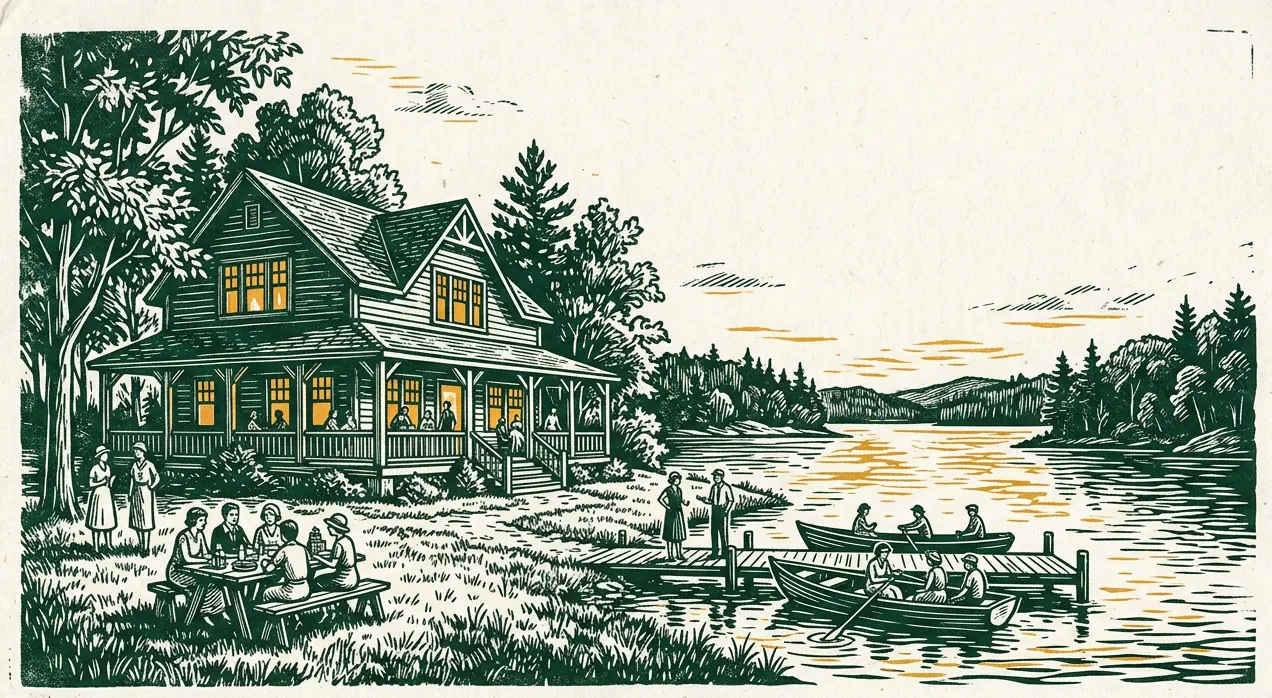
The Tsintzinians kept finding reasons to gather. In 1887, in Chicago, they founded the Therapnean Society, the first organization in America exclusively for Greeks. In 1895 they held their first reunion in Jamestown, a banquet for Christos Tsakonas, and in 1900 more than a hundred people came to a picnic on Lake Chautauqua.
In July 1915 the businessmen held a formal convention in Erie, Pennsylvania, to compare notes on running candy stores, restaurants and motion-picture houses, and to see old schoolmates. The invitation promised that no collections would be taken for any cause whatever.
“Across hills, mountains, deep valleys, broad fields, rivers and lakes, in your far away homes, we reach out our hands to grasp yours.”
The convention moved to Lake Chautauqua the next year. In 1921 the society bought the Moose clubhouse at Celoron for $10,000. The American Legion had first rights to it, but the Legion’s purchase money mysteriously went missing, and the Tsintzinians repaid the Legion’s $500 deposit to keep the peace. They cleared the mortgage in three years. At the dedication in 1924, George Gerasimos told the children present that it was their duty to keep the place “as good and beautiful as today”.
The yearbooks of the 1920s list more than five hundred Tsintzinian businessmen. John D. Lambros (opens in a new tab) was the society’s president in 1930, and Harry (opens in a new tab) sat on its board from 1937. It was at the 1947 convention that Harry (opens in a new tab)’s son George (opens in a new tab) met Mary Carayanis. Money raised there paid for schools, piped water and a road in the home villages, and later for the church in Zoupena’s square, whose main donor was Effie (opens in a new tab)’s husband, Jim Nicholakis.
When the family history was written, the gathering was still held in the last week of every July and drew two to three hundred people, many of whom had never seen Tsintzina. Peter Dickson knows of no other group from a single village that has gone on meeting for more than a century after arriving in America.
People in this chapter